What Is the Best Feeding Time for Cats? Understanding Their Natural Rhythm
Cats are creatures of habit, and their feeding schedule plays a crucial role in their overall health and behavior. Many cat owners wonder when the best time to feed their feline friend is. Should you feed your cat in the morning, at night, or multiple times a day? In this guide, we’ll explore the ideal feeding schedule based on your cat’s natural instincts and daily routine.

Understanding a Cat’s Natural Feeding Behavior
Cats are natural hunters, and their feeding behavior is influenced by their wild ancestors. In the wild, cats hunt multiple times a day, consuming small meals whenever they catch prey. This instinct is still present in domesticated cats, making frequent, small meals preferable over one or two large portions.
Best Feeding Times for Cats
The ideal feeding schedule depends on various factors, including your cat’s age, activity level, and health condition. Below are general guidelines:
1. Kittens (0-6 months)
-
Need 4-5 small meals per day.
-
High metabolism requires frequent feeding.
-
Wet or softened dry food is recommended for easy digestion.
2. Adult Cats (6 months - 7 years)
-
Best to feed twice a day (morning and evening).
-
If free-feeding dry food, portion control is essential to prevent overeating.
-
Wet food can be given in smaller portions throughout the day.
3. Senior Cats (7+ years)
-
Should eat 2-3 smaller meals per day.
-
Some senior cats prefer smaller, more frequent meals to aid digestion.
-
Wet food is often easier on aging teeth and kidneys.
Why a Consistent Feeding Schedule Matters
-
Prevents Obesity – Overfeeding or irregular feeding times can lead to weight gain.
-
Reduces Anxiety – Cats feel more secure when they know when to expect their meals.
-
Improves Digestion – A routine helps prevent overeating and digestive issues.
-
Prevents Nighttime Waking – Feeding your cat at set times discourages them from waking you up for food.
Using an Automatic Feeder for Consistency
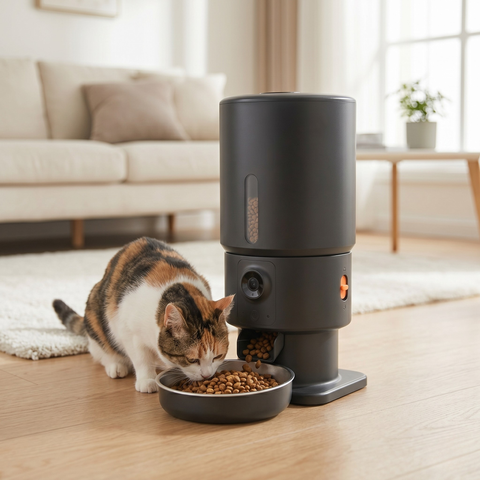
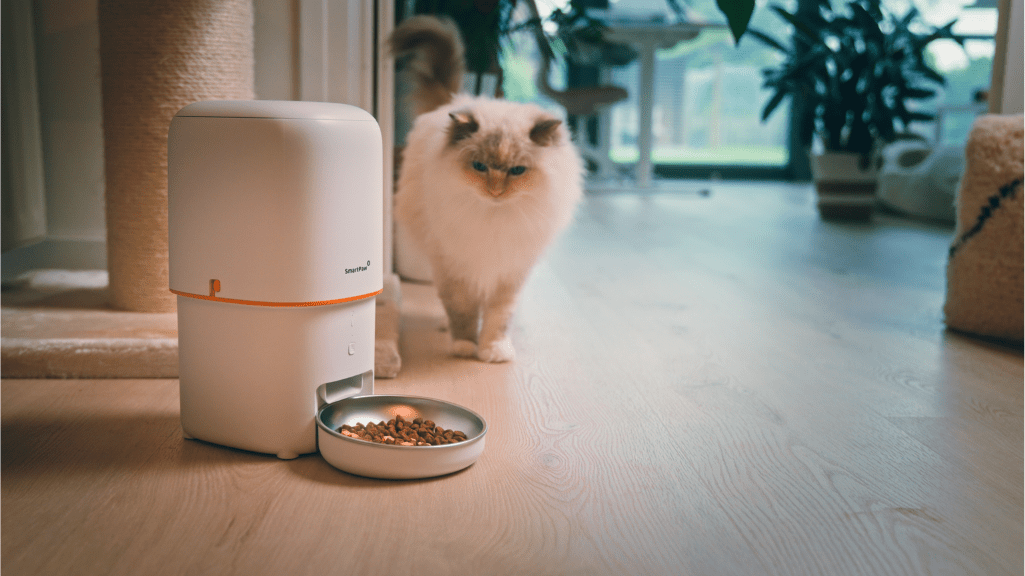
An automatic cat feeder can help maintain a regular feeding schedule, ensuring your cat receives meals at the right time every day. Benefits include:
-
Portion Control – Prevents overeating and weight gain.
-
Scheduled Feedings – Provides food even when you're not home.
-
Reduces Begging Behavior – Cats won’t associate you directly with feeding times.
How to Transition to a New Feeding Schedule
-
Gradually adjust feeding times over a week to avoid stress.
-
Use an automatic feeder to introduce a consistent routine.
-
Monitor your cat’s eating habits to ensure they adapt comfortably.
Conclusion
Feeding your cat at the right times can improve their health, digestion, and behavior. Whether you choose twice-a-day meals or more frequent small feedings, consistency is key. An automatic cat feeder can be an excellent tool to keep your cat’s routine steady and prevent mealtime stress.
Looking for a hassle-free way to feed your cat? Discover Smartpaw’s Automatic Feeders to ensure your cat gets the right meals at the right time!
More in this topic

Waarom drinkt mijn kat niet uit de drinkfontein?
Kat negeert de drinkfontein? Ontdek de 7 meest voorkomende oorzaken en los het vandaag nog op. Bekijk onze...

Waarom heeft mijn kat schilfers in haar vacht?
Schilfers bij je kat? Ontdek de 6 meest voorkomende oorzaken, wat je zelf kan doen en wanneer je...

Wat doe je als je oudere kat zichzelf niet meer poetst?
Poetst je oudere kat zichzelf niet meer? Ontdek de oorzaken, waarom het vaak op pijn wijst en hoe...
Something for your pet?
Our fountains, feeders and the FurVac are built to save you time and keep your pet happier.
Visit the shop