Hoe leer je je hond alleen thuis te blijven?

Whining, scratching at the door, or a knocked-over trash can as soon as you leave? Many dogs find being alone difficult, but it can be learned. With patience, short practice sessions, and a consistent routine, you can teach your dog that your departure is nothing to worry about. The SmartPaw editorial team outlines the approach.
By the SmartPaw editorial team · Published July 11, 2026 · Last updated July 11, 2026 · Facts checked by veterinarian and official sources (LICG, Veterinary Clinic).
📌 In brief
- Build up being alone gradually: start with seconds and extend to minutes.
- Multiple short successful moments per day work better than one long session.
- Ensure a consistent routine and a neutral departure and homecoming.
- Give a chew snack or stuffed toy that your dog only gets when you leave.
- Never punish anxiety; if stress occurs, take a step back in the buildup.
Why does my dog find being alone difficult?
Dogs are pack animals and naturally feel safer in company. Being alone is therefore something they need to learn. For puppies and insecure dogs, leaving them alone too quickly or for too long can lead to separation anxiety, which manifests as whining, barking, urinating, or destructiveness. A calm buildup prevents this.
How do you build up being alone step by step?
Start very small and increase the time alone if your dog remains relaxed. For example, first walk into another room for a few seconds, return before your dog becomes restless, and then slowly extend this to 10 to 30 minutes. The simple rule: relaxation = continue, tension = take a step back and practice shorter moments more often.
💡 Tip: Make sure your dog has been walked and is not full of energy before a practice session. A walked, calm dog learns to relax much more easily.
Does a consistent routine really help?
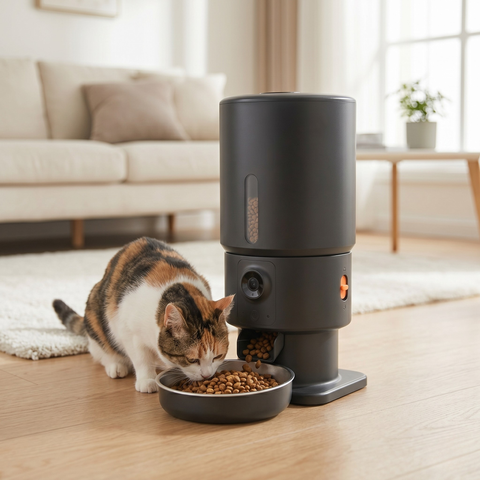
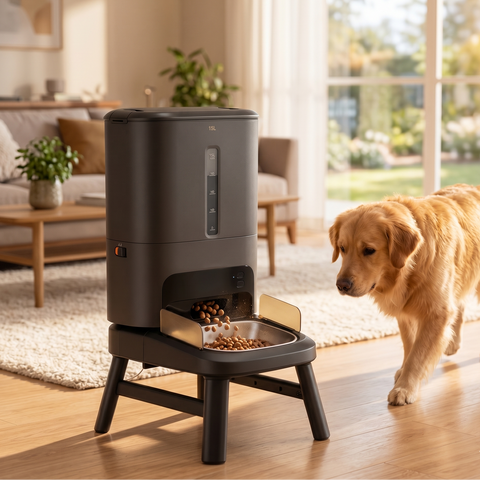
Yes. A predictable ritual makes your departure less stressful. Think of the same sequence of actions and a special chew snack that your dog only gets when you leave. Chewing has a calming effect and distracts from your departure. Fixed feeding times also provide structure – an automatic feeder ensures that the meal arrives on time, even if you are still on your way.

ChromeFeeder – 2L automatic pet feeder
Feed your dog at fixed times via the app, even when you're away. A predictable rhythm provides peace of mind.
View product →How do I ensure my dog drinks enough while I'm away?
Always provide plenty of fresh water, especially on warm days. A drinking fountain keeps the water flowing and fresh, encouraging many dogs to drink more. A wireless fountain also works if your dog is in a room without a nearby power outlet.

AquaPaw 2.5L – wireless pet fountain
Works on a rechargeable battery, so you can place it anywhere. Fresh, flowing water while you're away.
View product →⚠️ Never punish anxiety
Punishment or aids like an anti-bark collar are counterproductive: they cause your dog even more stress. If your dog remains in a panic despite a calm buildup, consult a behaviorist or your veterinarian. Anxiety and thunderstorms? Also read dog afraid of fireworks and thunderstorms: how to help him stay calm.
Frequently Asked Questions
How long can I leave my dog alone?
An adult, well-trained dog can usually be left alone for 4 to 6 hours. Build this up gradually, and keep the time much shorter for puppies.
Should I say goodbye when I leave?
No, keep departure and homecoming neutral. An exuberant goodbye or greeting makes the moment more exciting.
Does a second dog help with being alone?
Sometimes, but not always. A dog with true separation anxiety is often focused on you and benefits from training, not necessarily from a fellow dog.
Can I leave the radio or TV on?
Soft background noises can have a calming effect and dampen street noises. Test what your dog prefers.
View SmartPaw's smart feeders →
Sources: LICG – Alleen thuis blijven (Staying home alone); Dierenkliniek – verlatingsangst bij honden (separation anxiety in dogs).
This blog is informative and does not replace veterinary advice.
Meer uit dit onderwerp

Waarom verhaart mijn hond in de herfst?
Herfstrui uitgelegd: hoe lang duurt het, wat is normaal en hoe hou je het haar onder controle? Ontdek...

Waarom morst mijn hond zoveel water bij het drinken?
Plassen water rond de drinkbak? Ontdek waarom honden morsen, welke rassen het ergst zijn en 7 manieren om...

Waarom trilt of rilt mijn hond?
Trilt of rilt je hond? Ontdek de 7 meest voorkomende oorzaken, wanneer je best naar de dierenarts gaat...
Iets nodig voor je huisdier?
Onze fonteinen, voerbakken en de FurVac zijn gemaakt om je tijd te besparen en je huisdier gelukkiger te houden.
Naar de shop